

Across Canada, geohazards can disrupt critical infrastructure, threaten public safety, and affect communities in both remote and urban settings. Thurber helps clients identify, assess, and mitigate these risks, bringing specialized expertise to projects ranging from highways and pipelines to emergency response and long-term monitoring.
The work we do
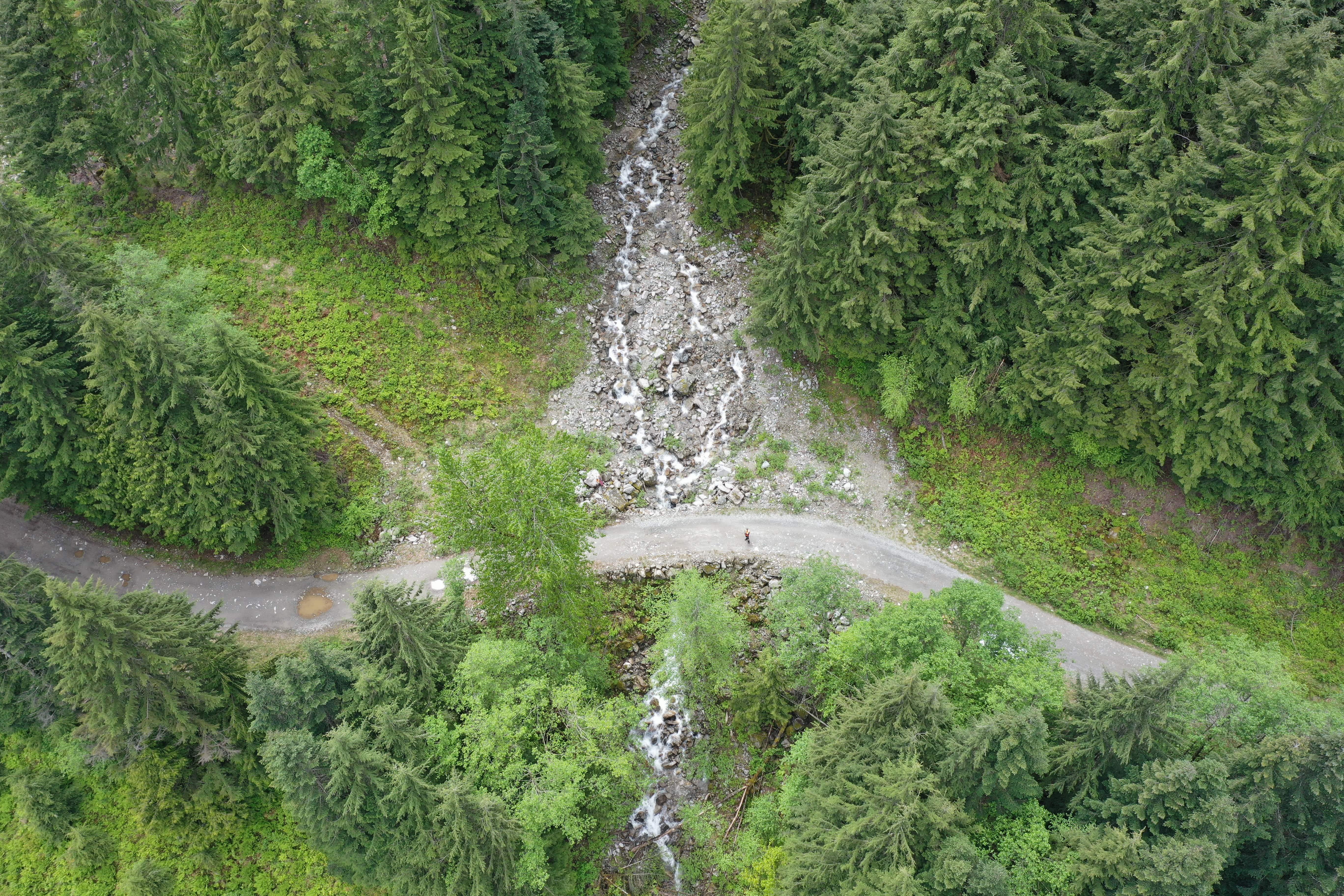
One current example is the Eagle Mountain Woodfibre Gas Pipeline project near Squamish, B.C. “It’s an exciting project,” says Tori Smith, an Engineering Geologist at Thurber. “There are many geohazards to work around and design for, including active debris flow, rockfall hazards, landslides and avalanche paths. Protecting both the active construction site and the future pipeline is critical.”
Thurber also supports clients in protecting transportation corridors. Jessica Dhami, a Geoscientist and Geological Engineer-in-Training at Thurber, points to the North Beach Slide in the Okanagan as one of the most impactful geohazards projects she has worked on. “The slide was above a major highway corridor that had to be closed, affecting many people in Okanagan communities,” she says. “I valued the opportunity to help people and contribute to the emergency response.”
“We make communities we live in safer and make the public more aware of the natural hazards in the areas that we live in.” – Jessica Dhami
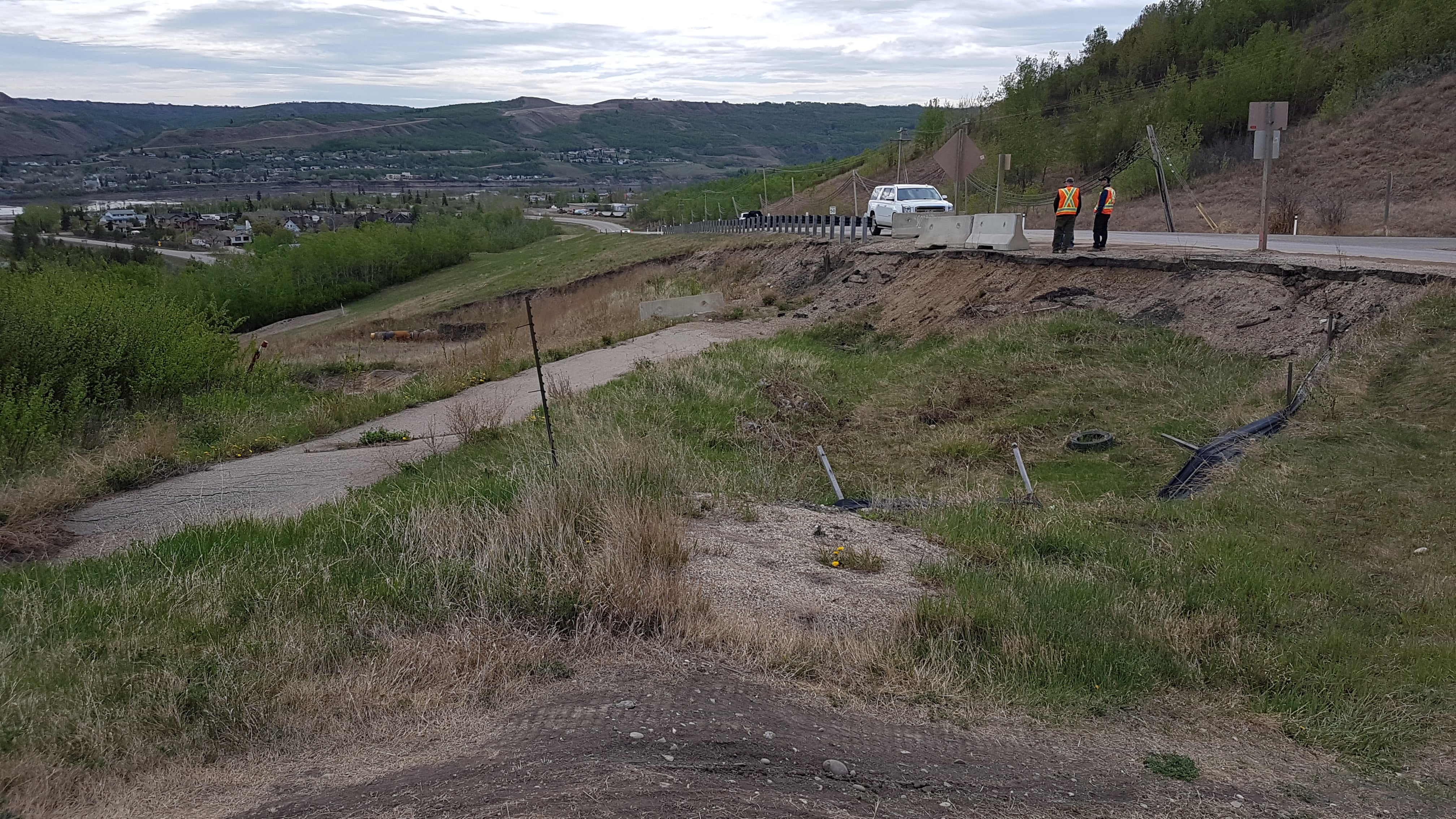
Not all geohazards are as dramatic as those seen in mountainous terrain, but they can be just as consequential. Don Proudfoot, a Thurber Partner and Senior Geotechnical Engineer, has worked with Alberta Transportation for more than 25 years to help keep Alberta’s highways safe. He currently supports the province in Peace Country, one of the most active mass-movement and geohazard regions in Western Canada due to its deep river valleys and erodible glacial and post-glacial soils. Landslides in the Peace Valley affect roads throughout the area, and Thurber plays an ongoing role in assessing risk. “We inspect the sites every year and help Alberta Transportation understand which ones should be prioritized for mitigation,” says Don. “We also monitor active sites using instrumentation to help verify that communities are safe.”
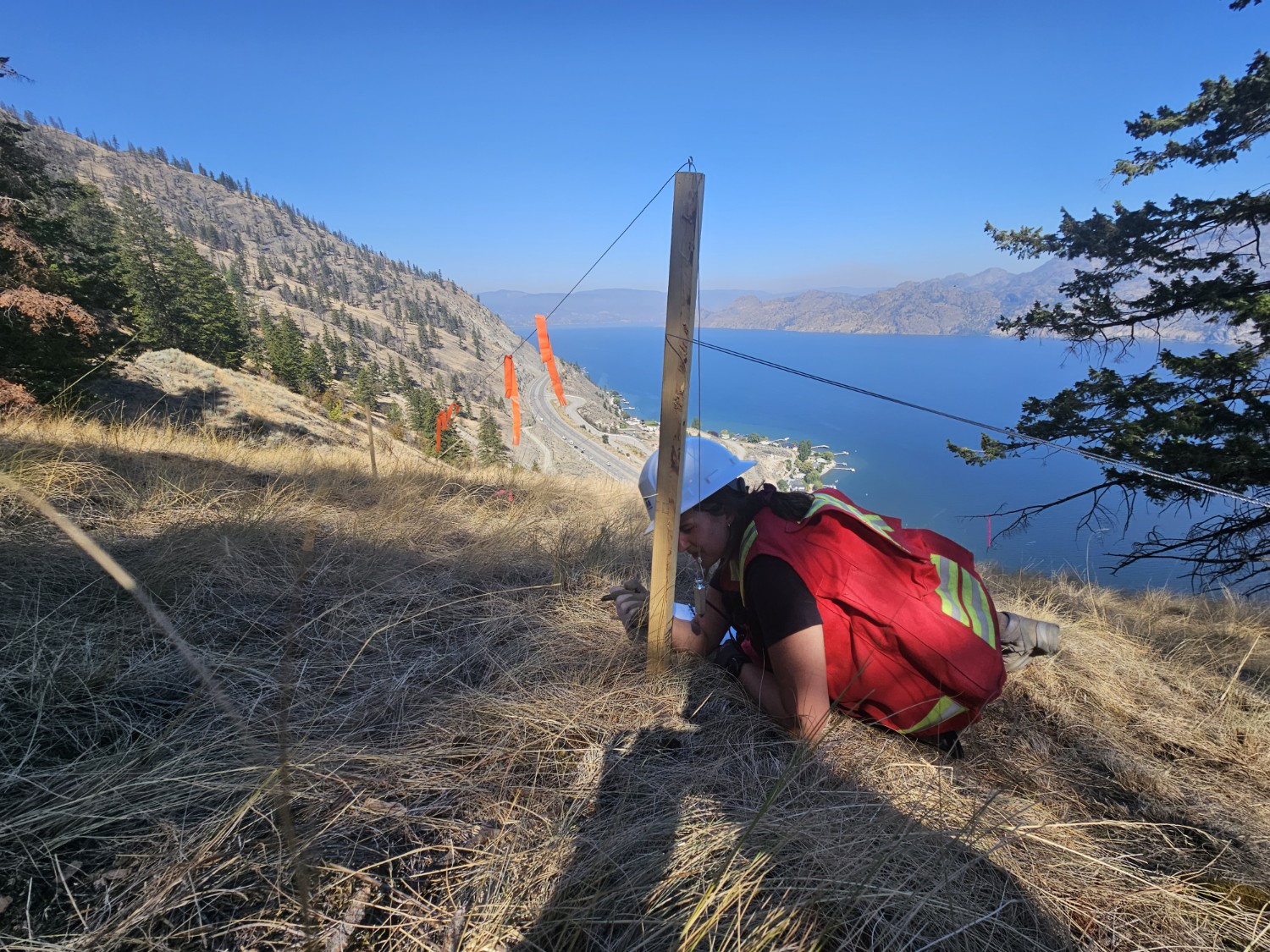
Pictured: Jessica Dhami at the North Beach Slide
A career in geohazards at Thurber
Like many technical specialties, geohazards work attracts people through different paths. Tori says she always knew she wanted to work in this area, while Don came to it through experience. “I got involved in a few projects and found that I really enjoyed it,” he says. “That led me to pursue this line of work.”
For Tori, Jessica, and Don, the work is especially rewarding because it combines problem-solving with tangible community impact. “I get to see issues that other people don’t necessarily see, and I get to help communities and make a difference” says Tori. Jessica adds that “every project is a little different, and you get to use your creativity to solve problems. You also get to work in some really beautiful places.” For Don, one of the most satisfying aspects is seeing a project through from start to finish. “You get to act as a prime consultant and follow the site from the initial problem through design, repair, and ongoing monitoring,” he says. “You design something, fix it, and then improve your approach for the next project.”
All three agree that Thurber is a strong place to build a geohazards career. “We have a highly skilled and diverse team of geohazards engineers and geoscientists at Thurber,” says Jessica. “The scale and variety of our projects create many opportunities to learn and grow with support from experienced mentors across the company.”
The importance of geohazards work is ever increasing
As climate patterns become more volatile, the importance of geohazards work will only continue to grow. “We will always need safe access to highways, pipelines, and rail lines that cross hazardous terrain, and those hazards can intensify with climate swings,” says Don. He points to a valley north of Peace River that had been performing well until a severe weather event caused extensive erosion and created new geohazard challenges at the site.
Recent years have underscored how quickly natural events can create urgent geohazard challenges, from the 2013 Calgary floods and the 2021 atmospheric river that damaged the Coquihalla Highway to the wildfires in Fort McMurray and Jasper. In moments like these, Thurber has supported clients with emergency response, geohazard mitigation design, construction oversight, and long-term monitoring.
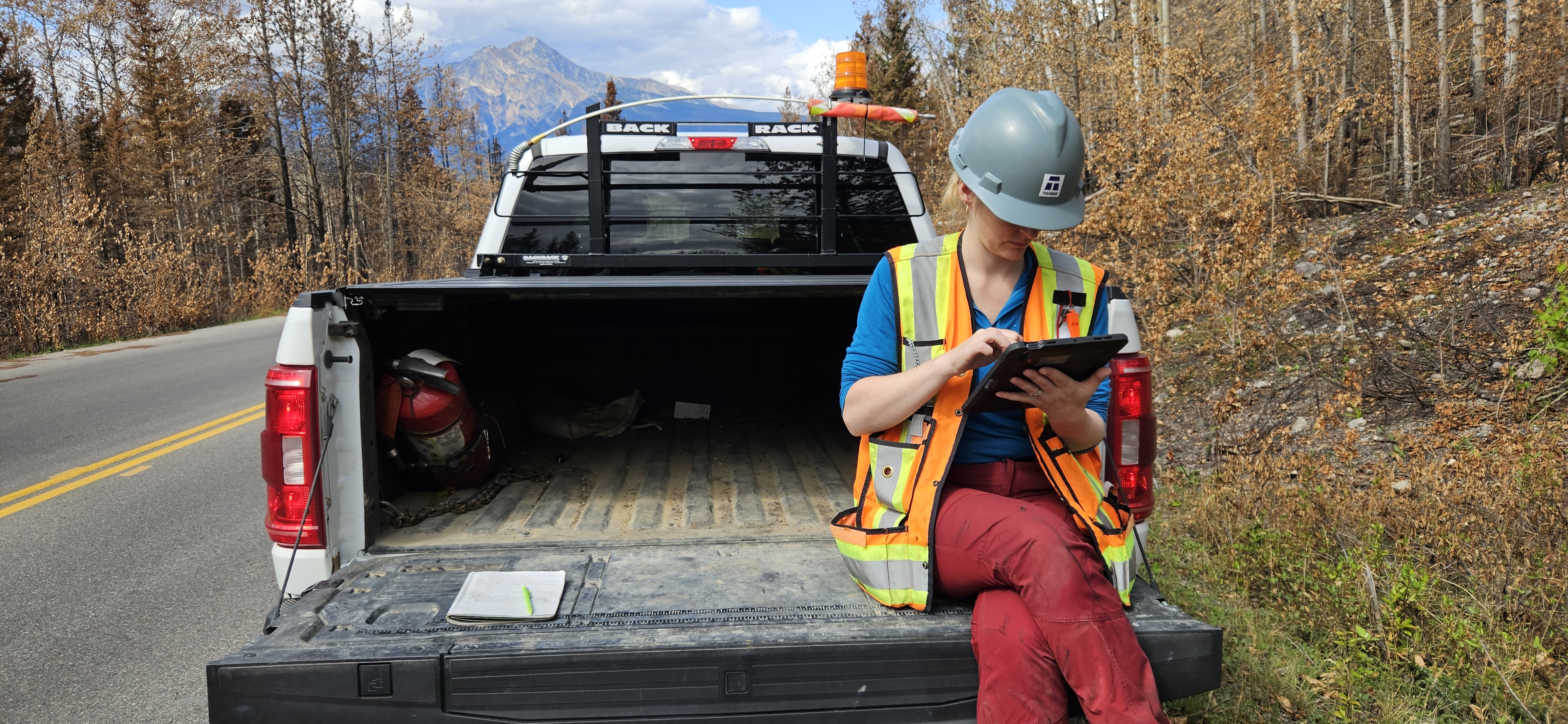
Pictured: Tori Smith following a geohazard review post-Jasper wildfires
--
Thurber's depth of experience will also be on display at Geohazards 9 (June 1 - 3, 2026), where Tori, Jessica, and Don will share insights from projects that reflect the breadth and impact of Thurber’s work:
“Field, B.C.: Terrain Stability Assessment for Wildfire Risk Reduction Management in Yoho National Park” — presented by Tori Smith; co-written with Paul Wilson
“Hwy 97 North Beach Slide: Emergency Response, Monitoring, and Managing Risk to the Travelling Public” — presented by Jessica Dhami; co-written with Warren Wunderlick
“Risk-Informed Management of Highway 2/68 Dunvegan South Hill Alignment” — presented by Don Proudfoot; co-written with Jose Pineda (Thurber) and Kristen Tappenden (Alberta Transportation and Economic Corridors)