

.jpg)
Brownfield sites present both risk and opportunity. Thurber can help developers, insurance companies, and financial institutions decrease risk and accelerate approvals.
Our environmental team works with you from the acquisition stage of a site. We identify and quantify contamination through Phase I and Phase II Environmental Site Assessments, delineate contaminants, provide remedial options, and help stakeholders understand the environmental liability of a project. The information we provide allows developers to evaluate a site’s financial viability and make informed decisions about whether to proceed with a purchase.
If developers choose to proceed with a land purchase, Thurber can tailor remediation and risk management plans that align with the site’s intended use.
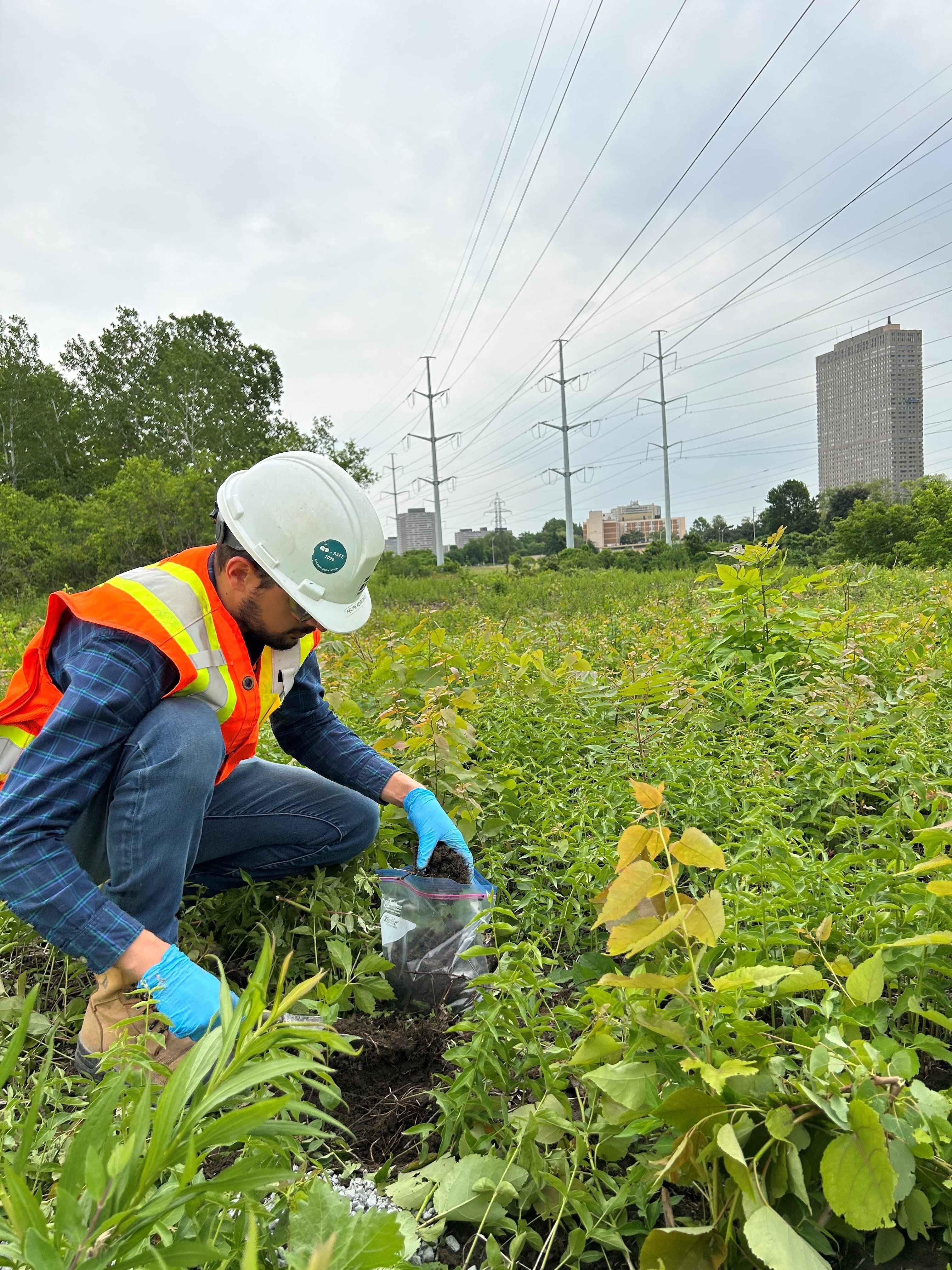
Brownfield redevelopment often involves complex regulatory pathways. Thurber works proactively with municipal, provincial, and federal agencies to streamline approvals and prepare required documentation. Our experience helps minimize delays and provides confidence to stakeholders, including lenders and regulators.
Our environmental team works with our geotechnical team to uncover subsurface risks that may be unique to former industrial sites: buried structures, poor soil conditions, and low-quality fill. This information is crucial to design a structure’s foundations and construction methods, determining cost, and preventing surprises during construction.
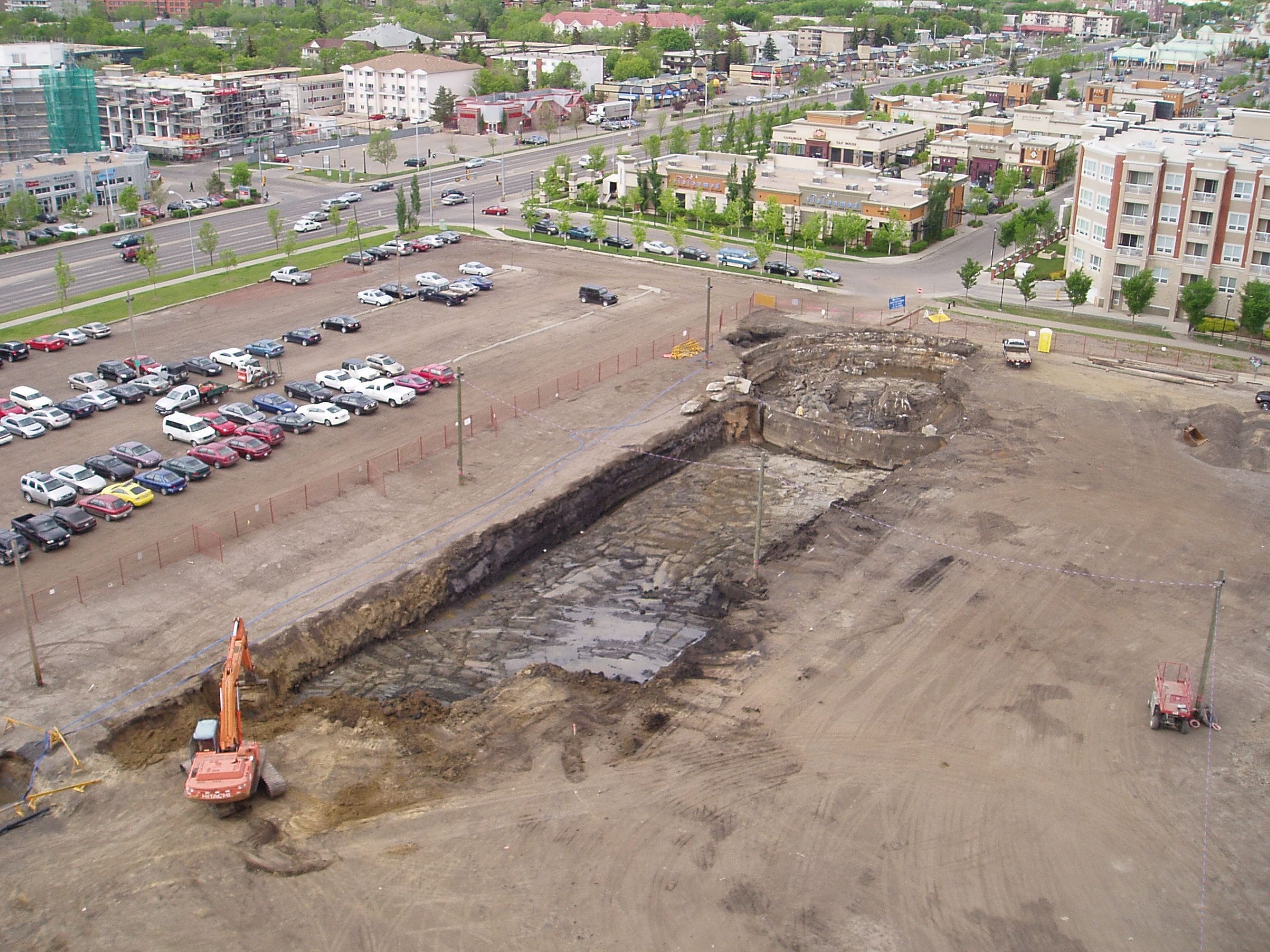
Our involvement continues into construction, where we provide monitoring, quality assurance, and compliance verification. We help teams respond in real time to changing site conditions, reducing costly surprises and ensuring that environmental and geotechnical requirements are met.
This integrated approach can directly unlock land value. For example, on a project in Alberta, a site located adjacent to a former landfill was subject to a 300-metre regulatory setback. Through detailed environmental and geotechnical investigation and proactive regulatory engagement, Thurber secured a setback variance that enabled the developer to increase the amount of developable land and maximize the project’s return.