

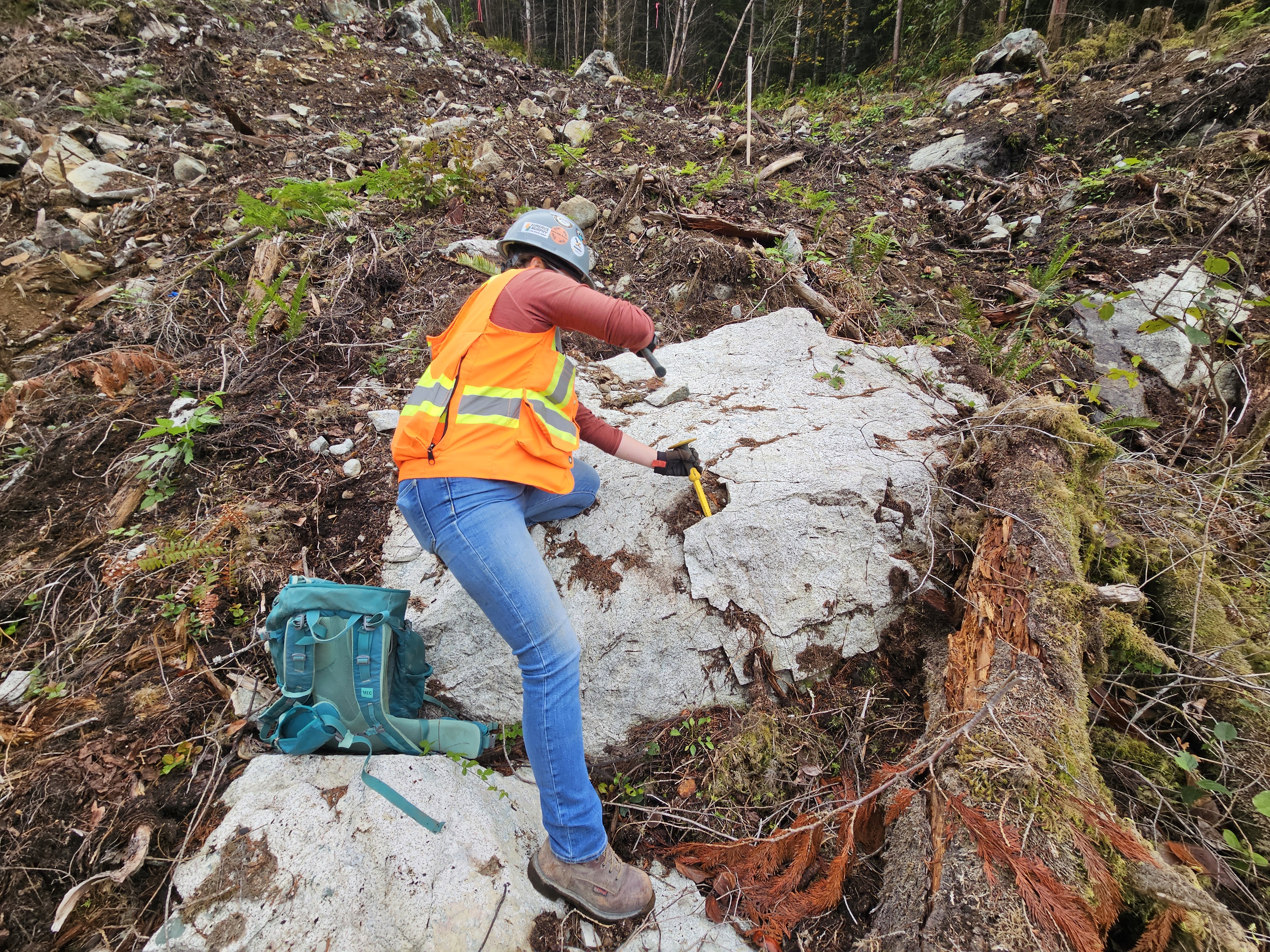
Understanding and managing metal leaching/acid rock drainage (ML/ARD) in British Columbia could be required for linear infrastructure projects that disturb rock - including roadworks and pipelines, land development projects, and in the quarries that service these projects.
What is ML/ARD?
ML/ARD is a naturally occurring environmental issue that is made significantly worse when ML/ARD-prone rock is disturbed and exposed to oxygen and water. When exposed, high concentrations of dissolved metals, acidity and sulfate can be released to the environment, posing a risk to surface and groundwater.
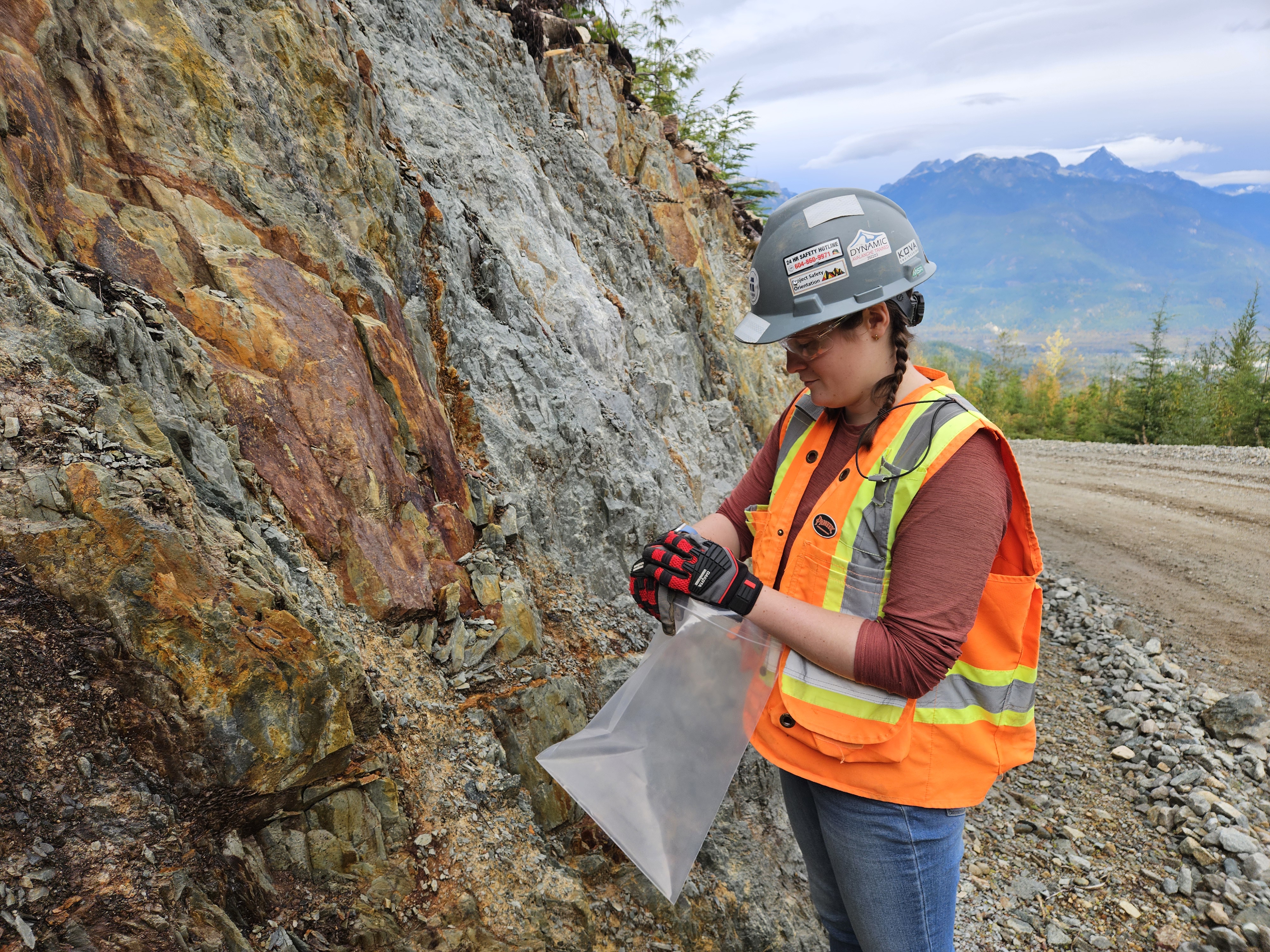
Pictured: Thurber assesses ML/ARD prone rock for an infrastructure project
What types of projects may require ML/ARD assessment?
Pretty much anything that disturbs rock: land development, pipelines, and road and highway projects. It may also be required for the quarries that supply these projects with bedrock-derived aggregate or rip rap material.
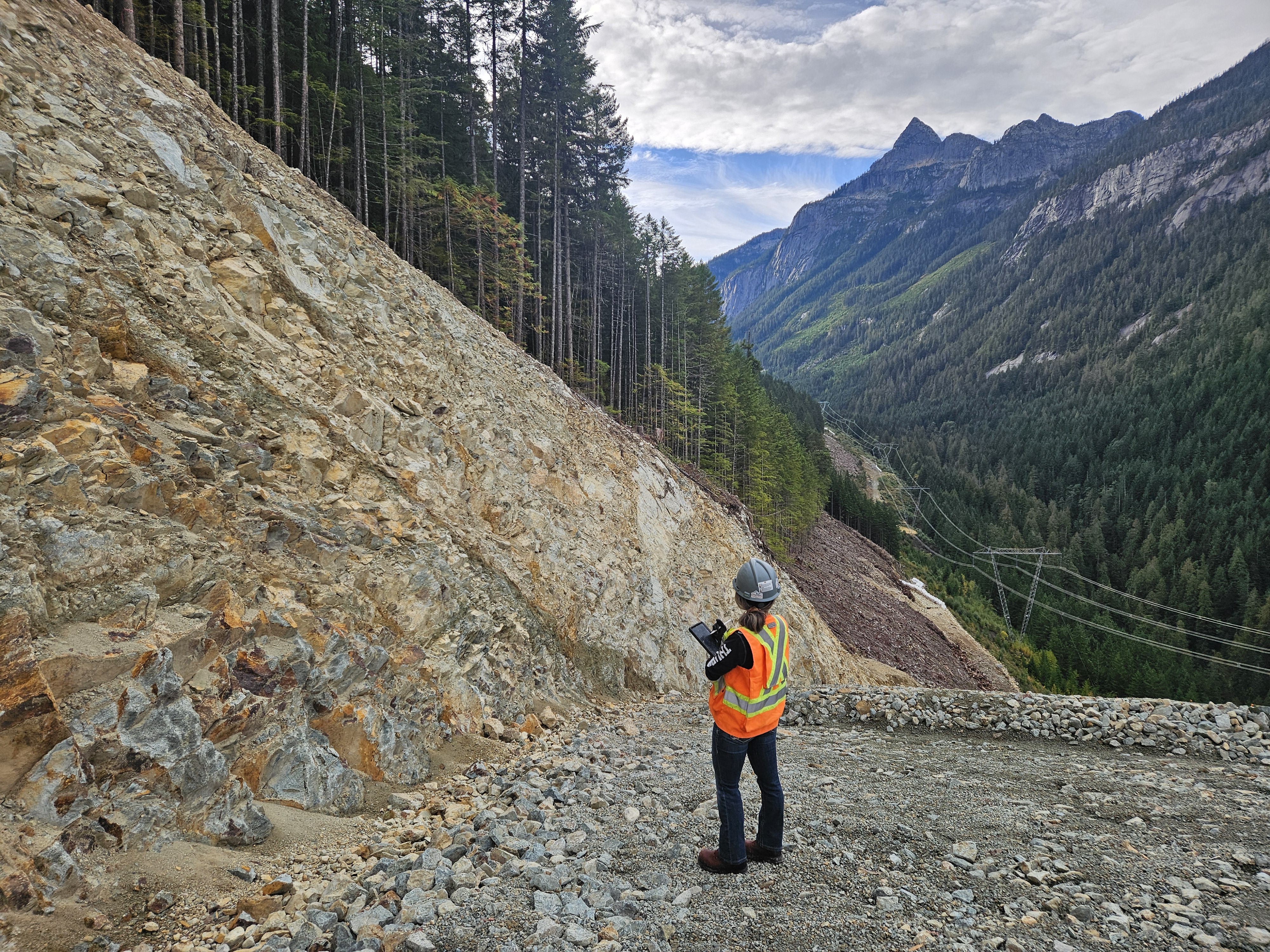
Pictured: ML/ARD can occur on any project that disturbs rock
How does Thurber help?
- We help clients assess and manage the risks associated with ML/ARD in accordance with BC Ministry of Transportation and Transit's Technical Circular T-04/13.
- We offer a rapid non-destructive testing methodology that we employ on a range of projects. The methodology uses portable X-Ray fluorescence meters (pXRF) to detect and measure elemental compositions in minutes. This allows for quick decision making, thereby saving time and money.
- We don’t just assess: we provide ML/ARD management plans or detailed mitigation designs for disturbed ML/ARD prone rock material.
- When needed, we provide pre-construction (baseline), construction or post-construction phase environmental monitoring, including assessment of surface or groundwater quality, to track mitigation effectiveness.
Reach out to us today to discuss your ML/ARD needs!
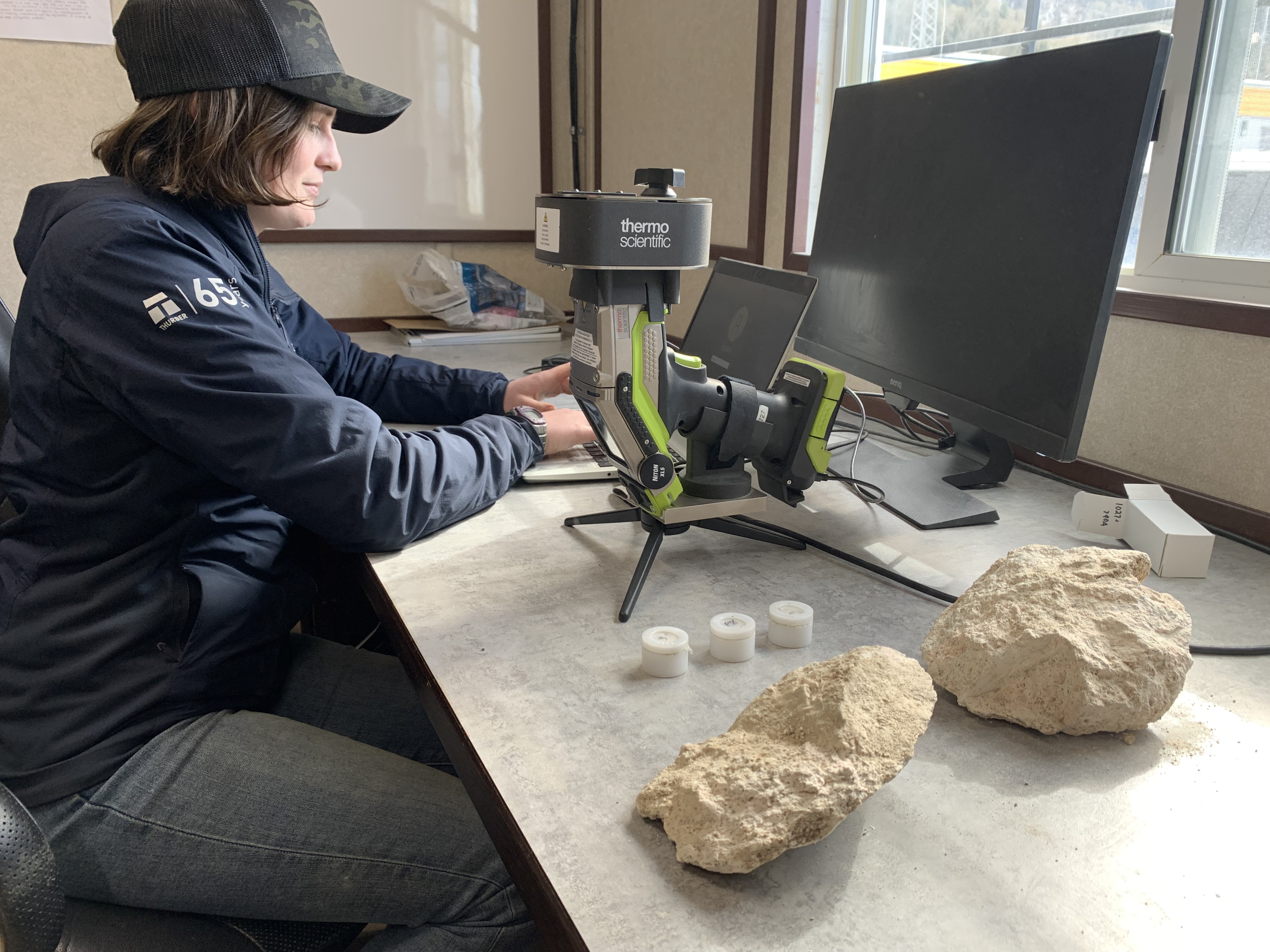
Pictured: Thurber uses the pXRF to detect and measure elemental compositions in rock samples to assess ML/ARD potential in minutes.