

At Thurber, we're committed to making a difference for our clients - and one of the ways we do that is by providing innovative solutions to unique challenges.
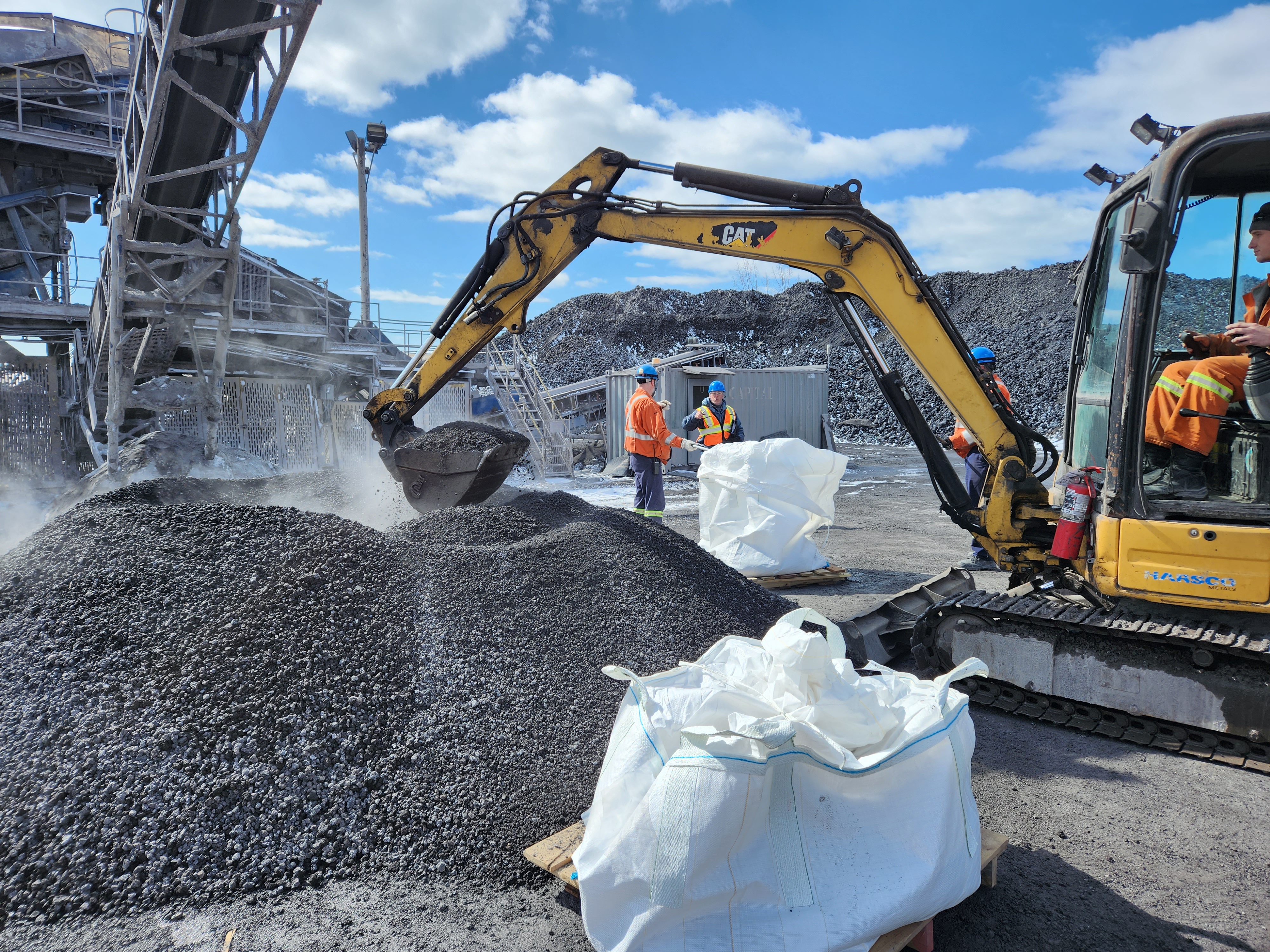
Our Pickering pavement team recently partnered with Gerdau and Harsco Environmental to tackle a pressing environmental challenge: finding a sustainable use for Electric Arc Furnace (EAF) slag, a coproduct of steel recycling. Thuber's innovative research has paved the way for repurposing this material as a substitute for natural aggregate in hot mix asphalt (HMA), potentially transforming how Ontario builds its roads.
The challenge
EAF slag is a premium part of HMA in Quebec, but Ontario has carefully controlled its use since the 1990s due to performance issues. Thurber's study needed to understand why EAF slag had performance issues in the '90s, and how they could be overcome. We also needed to determine if the slag could be a viable component of HMA and what the idea ratio of slag to natural aggregate could be.
Thurber's approach
Through literature review, material testing, and development of multiple asphalt mix designs, Thurber found that incorporating up to 30% EAF slag into HMA not only meets Ontario specifications (OPSS.PROV 1002) but often outperforms traditional mixes in strength, flexibility, and fatigue resistance. These results present a strong, evidence-based case for revisiting slag’s use in Ontario.
Benefits of incorporating EAF slag into HMA
If implemented, incorporating EAF slag into HMA could reduce waste, reduce reliance on natural aggregates, and support more sustainable road construction. Thurber has presented its findings to the Ministry of Transportation Ontario, and discussions are underway for a trial highway paving section.
Other opportunities
While this study focused on asphalt, Thurber believes EAF slag could have other valuable applications, further reducing waste and supporting a greener future.
Thurber’s research demonstrates how engineering innovation can turn industrial waste into a resource, supporting both economic and environmental goals. As the project moves toward real-world highway trials, it stands as a model for sustainable infrastructure and cross-industry collaboration.