

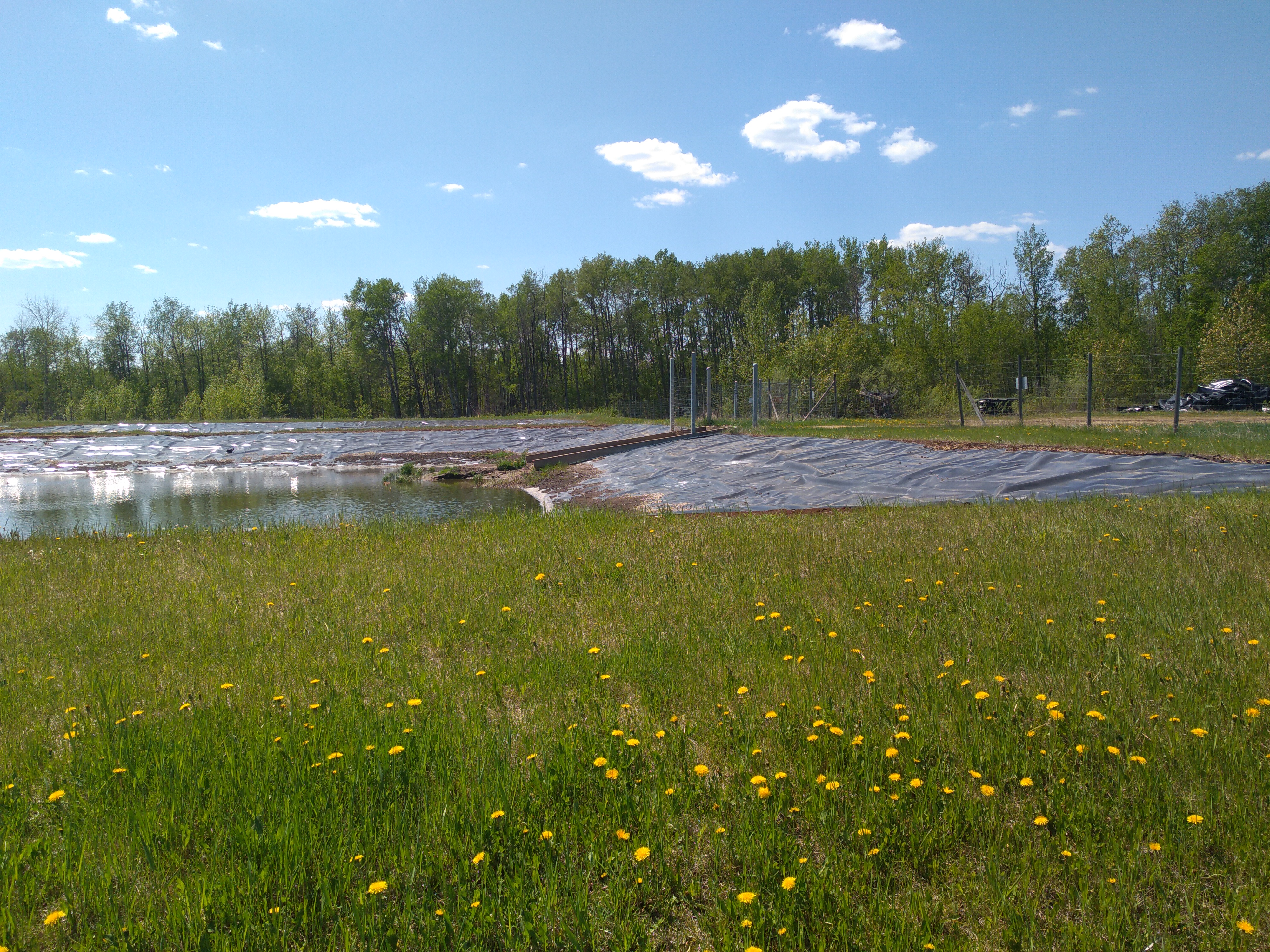
Located along the shores of the Lesser Slave Lake in Northern Alberta, the Driftpile Cree Nation (the Nation) is home to approximately 1,200 members. Thurber recently completed a project on the Nation that addressed a critical environmental issue and created opportunities for the Nation to build economic capacity through hands-on involvement in the project's delivery.
In 2016, the Nation identified that a failing lagoon liner in their wastewater treatment facility was allowing wastewater to leak into the surrounding watershed near Slave Lake. A simple repair wasn't enough, the lagoon needed to be fully decommissioned and the land restored.
Working alongside M2 Engineering, Thurber provided geotechnical and environmental oversight while the Nation played a central leadership role throughout the process.
Importantly, the work was carried out with strong community involvement:
-
The Nation’s contractors completed much of the work, including dewatering, and liner and sludge removal. This provided local employment and transferable skills
- Community members contributed knowledge and guidance
- Indigenous knowledge helped shape how the land was restored
The team navigated several technical and environmental challenges:
- Working adjacent to a creek and Slave Lake required strict measures to prevent further contamination
- Unknown materials, including potential hydrocarbons, had to be carefully managed
- Grading had to account for nearby culturally sensitive areas
- Innovative disposal strategies avoided unnecessary cutting of lagoon liner, improving efficiency
Ultimately, the team eliminated the ongoing source of contamination and restored the site for safe agricultural use. We're particularly proud of our work on this project as it helped transform an environmental liability into a community asset, integrated engineering expertise with Indigenous knowledge, and delivered social value to the Driftpile Cree Nation.
As for the failed wastewater treatment plant, Thurber provided geotechnical solutions for its new location with M2 Engineering leading the engineering. The new facility was commissioned in 2021.